
For decades, Kiwi homeowners accepted a frustrating winter ritual: wiping puddles of condensation off aluminium window sills, turning up the heat pump, and watching energy bills skyrocket.
With New Zealand’s updated H1 Building Code regulations now fully embedded into the industry standard, highly conductive single-glazed and non-thermally broken aluminium frames are officially a thing of the past.
As a result, Kiwis looking to renovate or build new face a crucial decision. If you have to upgrade your joinery anyway, is it genuinely worth spending your hard-earned money on uPVC double glazing? Or is it just marketing hype over cheaper traditional frames?
Let’s break down the actual 2026 costs, long-term energy savings, lifestyle benefits, and the raw performance metrics of uPVC in New Zealand’s uniquely harsh climate.
The Raw Numbers: What Does uPVC Double Glazing Cost in NZ (2026)?
The word “investment” implies an upfront cost.
It is no secret that high-performance framing carries a different initial price tag than standard, entry-level builder-grade options.
However, when compared to premium alternatives like thermally broken aluminium or structural timber, uPVC offers an incredibly competitive sweet spot.
Exact costs depend on your specific home, such as whether you are doing a full replacement or a new build, your opening styles (like high-security European Tilt & Turn systems), and your glass specifications (Low-E and Argon gas filling).
The table below outlines typical budget expectations for a standard 3-bedroom Kiwi home:
| Frame Material Type | Typical 3-Bedroom Home Cost Range (NZD) | Thermal Performance (R-Value Capacity) | Maintenance Required |
| uPVC Frames | [estimated costs] | Excellent (No thermal bridging, natural insulator) | Virtually Zero (Wipe down only) |
| Standard Aluminium | $22,000 – $32,000 | Poor (Rapidly conducts cold and heat) | Low (Prone to coastal pitting) |
| Thermally Broken Aluminium | $30,000 – $48,000+ | Good (Improved, but carries a price premium) | Low |
| Timber Frames | $35,000 – $60,000+ | High (Natural insulator, high luxury cost) | High (Sanding, painting, sealing) |
Note on Cost Variables: Estimates are based on full-frame replacements for a standard 100m²–120m² home with 12–15 windows. Exact pricing varies depending on the ratio of fixed windows to high-security opening variants (like European Tilt & Turn systems), glass specifications (such as Low-E or Argon gas), and installation complexity.
The Financial Return: How uPVC Pays You Back
Determining if uPVC double-glazed windows are “worth it” requires looking past day one and evaluating the operational ROI over the life of your home.
1. Slashed Monthly Power Bills
Windows are the thermal weak points of any house; up to 40% of a home’s heating energy escapes through poor joinery.
Because uPVC acts as a natural barrier to heat transfer, your home retains the warmth generated by your heating system. Your heat pumps don’t have to work overtime, resulting in lower power bills month after month.
2. Zero Ongoing Maintenance Costs
Timber frames demand painting every few years to prevent rot, and standard aluminium can oxidise and pit when exposed to salty New Zealand coastal air.
Modern uPVC is completely immune to rust, corrosion, rot, and peeling. The only maintenance required is a quick wipe down with soapy water to keep them looking brand new.
3. Immediate Property Equity
In today’s property market, buyers are incredibly energy-conscious. Homes with crying windows and damp walls are viewed as liabilities requiring deferred maintenance.
Installing high-performance uPVC joinery modernises your home, instantly boosting its resale value and market appeal.
uPVC vs. Aluminium: The Real NZ Showdown
New Zealand has historically been an “aluminium first” country, but that legacy was built on cheap manufacturing rather than home comfort. Let’s look at how the two materials actually compare under pressure.
The Condensation and Health Factor
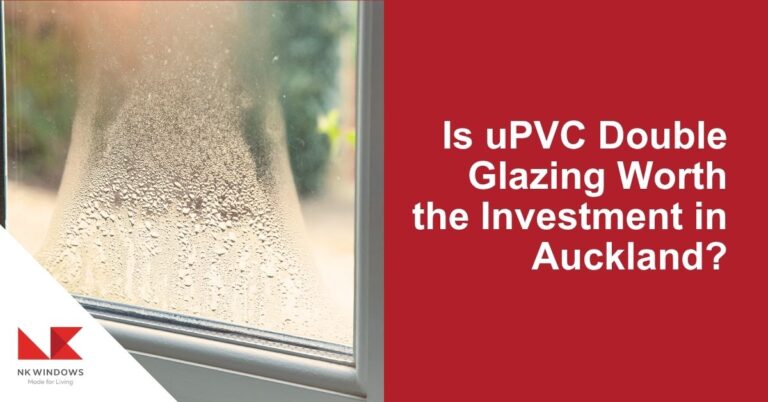
Aluminium is a metal, meaning it is highly conductive. When the cold winter air hits the outside of an aluminium frame, it cools the inside of the frame down to freezing. When warm, moist indoor air hits that cold spot, it instantly condenses into water.
This moisture leaks into your wall cavities, damages your curtains, and creates a breeding ground for toxic black mold. Because uPVC frames stay warm to the touch, they completely break the condensation cycle, providing a genuinely healthy home environment.
The UV Durability Myth
A common historic concern was whether uPVC could survive New Zealand’s brutal, high-UV sunlight without turning yellow or becoming brittle.
Modern, high-performance uPVC profiles (such as the German-engineered Aluplast profiles used by NK Windows) are formulated with high concentrations of titanium dioxide and advanced UV stabilisers. These profiles are specifically engineered and tested to withstand extreme solar radiation without warping, fading, or cracking.
The Ultimate Stress Test: From Antarctica to Your Living Room
When assessing a product’s true structural integrity and lifespan, consider its extreme use cases.
For nearly 15 years, our Christchurch-based manufacturing team has been trusted to design, manufacture, and supply custom uPVC window and door systems to Scott Base, Antarctica.
The engineering briefs issued by Antarctica New Zealand are among the most rigorous on Earth. The joinery must hold stable indoor temperatures while enduring sub-zero temperatures dropping to -50°C and violent polar gales that flex standard materials to their breaking point.
Furthermore, for specific geomagnetic research huts, the frames had to be entirely non-metal to prevent interference with sensitive scientific instruments.
To read the full breakdown of how our technology survives at the South Pole, read our case study on uPVC performance at the edge of the world.
The logic for Kiwi homeowners is simple: if this exact uPVC technology can safeguard scientists and sensitive equipment in the harshest climate on earth, it will easily handle a bitter Otago frost, a heavy Wellington southerly, or a humid Auckland winter.
The Verdict: Is uPVC Double Glazing Worth It?
If you want the cheapest initial product on the market, regardless of comfort, health, or power bills, basic entry-level frames are available.
However, if your goal is to build or renovate a home that is warm, quiet, structurally dry, and energy-efficient for the next 30 to 40+ years, uPVC delivers the highest performance-to-cost ratio available in New Zealand.
Reviewing the overarching benefits of uPVC windows & doors makes it clear that uPVC is not a luxury expense – it is a smart, protective investment in your family’s health and your property’s future.
Frequently Asked Questions
Do I need a building consent to replace my windows with uPVC in NZ?
Generally, a straightforward, like-for-like window replacement does not require building consent, provided you are not altering structural framing, expanding the opening size significantly, or modifying a load-bearing lintel.
Can I retrofit uPVC glass into my existing aluminium frames?
No. “Retrofit double glazing” usually refers to placing new double-glazed glass panes into your old, existing aluminium frames. While this improves the glass performance, it leaves the highly conductive metal frame in place, meaning your windows will still suffer from cold transfer and frame condensation. A full replacement with uPVC updates both the glass and the frame for maximum insulation.
How do uPVC windows perform with acoustic noise control?
Excellently. Because uPVC frames feature welded corners, multi-chambered interiors, and dual-compression seals, they form an airtight bond when closed. Combined with double glazing, they act as a highly effective sound barrier against traffic, aircraft, and neighbourhood noise.
Have more questions about installation timelines, warranties, or specific opening styles? Explore our comprehensive NK Windows FAQs or reach out to our team for a personalised quote.