

Ask most Kiwis about double glazing, and they will tell you it is made for freezing places like Christchurch or Queenstown. Because Auckland rarely gets frost and never sees snow, it is easy to think double glazed windows are an unnecessary expense up north.
However, keeping out the winter cold is only half the job of a good window.
Living in Auckland means dealing with sticky summer heat, muggy humidity, heavy rain, and noisy traffic from busy roads. When you look at how windows actually work, double glazing is not just a winter heater shield. It is a year-round climate shield that keeps your home comfortable, dry, and quiet through every season
Is Double Glazing Necessary in a Warmer Climate Like Auckland?
Double glazing is worth it in Auckland because it acts as a two-way barrier, stopping muggy summer heat from getting inside, lowering indoor moisture, and reducing how much you need to run your heat pump.
To understand why it works so well, think of single-pane glass like an open door for outdoor temperatures. During Auckland’s sunny spells, heat passes straight through the glass and gets trapped inside your house. When you turn on an air conditioner to cool things down, that expensive cool air quickly escapes right back out.
Upgrading to modern uPVC double glazed windows works alongside energy-efficient windows and doors to wrap your home in an airtight blanket.
Instead of dealing with rooms that swing between sweltering heat of the day and the crisp chill of night, the double layer creates a steady, comfortable temperature all day long. This two-way protection sets the foundation for controlling harsh summer heat.
Summer Heat Control: How Double Glazing Keeps Auckland Homes Cool
During hot Auckland summers, regular single-pane glass acts like a giant magnifying glass. Strong sunlight beams straight through the window, turning living rooms and bedrooms into ovens.
Double glazing tackles this problem by using two panes of glass separated by a sealed pocket of argon gas, combined with an invisible coating called Low-E glass.
This setup acts like sunblock for your house. The Low-E layer reflects harsh solar heat back outside, while the insulated gas pocket stops hot outdoor air from warming the inside pane. A tinted glass pane can also be added to further reduce solar gain and heat build-up during the summer months. Keep in mind that tinting is permanent and will also reduce solar gain in winter, which is why talking to an expert is essential to finding the right balance for your home.
Choosing energy-efficient windows that keep heat out takes the pressure off your heat pump, meaning you spend far less money blasting the air conditioning on muggy summer afternoons.
As an added perk, blocking those harsh UV rays also helps with preventing sunlight fading on your timber floors, couches, and rugs.
Controlling the hot summer sun is only half the battle in Auckland, though. The region’s damp air brings another major challenge: crying windows and their persistent companion, mould.
Why Do Auckland Windows Get Condensation?
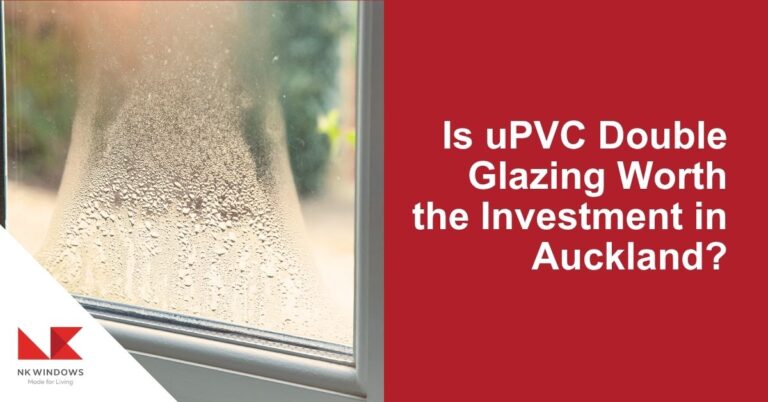
Auckland windows get heavy condensation because warm, moist air inside the home hits cold single-pane glass and metal frames, causing airborne moisture to cool and turn into liquid water.
While our summer brings stifling heat, Auckland’s mild, wet winters introduce the opposite problem: dampness that’s hard to shift.
Because the region sits in a humid coastal belt, everyday habits like cooking, hot showers, and drying clothes inside trap litres of water vapour indoors each day.
When that damp indoor air hits cold, single-pane glass, it quickly drops below its dew point. The moisture has nowhere else to go, turning into running droplets that pool on timber sills and feed black mould on curtains and walls.
Double glazing stops this cycle by keeping the inside pane of glass warm, removing the cold surface that causes indoor water droplets to form. In fact, the main reason your windows get dewy in the morning on the outside of the glass is actually great news, because it proves the double glazing is doing its job and keeping indoor warmth locked inside.
Even so, high-performance glass only does half the job. They need to be paired with window frames that keep cold and moisture from sneaking through.
Why Your Window Frames Matter Just as Much as the Glass
If you fit top-grade double glazing into standard aluminium frames, you only solve half of the problem. Standard aluminium is metal, and metal acts like a heat highway. On cold nights, the outside chill travels straight through the frame, turning the inside metal cold and creating the exact same sweat and mould issues you are trying to fix.
That is why the uPVC vs aluminium debate in NZ matters so much to Auckland homeowners. Unlike metal, uPVC is a natural insulator, built with hollow internal chambers that stop cold air in its tracks and keep your frames dry to the touch.
Beyond stopping crying frames, uPVC joinery brings three key advantages to Auckland’s coastal climate:
- No Salt Air Damage: With Auckland’s coastline never too far away, sea breezes carry airborne salt across almost every suburb. Quality uPVC will never rust, corrode, or pit like bare metals can.
- Low Maintenance: You never have to spend weekends sanding, painting, or varnishing to protect your joinery, giving you long-lasting durability with very little maintenance.
- A Quieter Home: With Auckland building more townhouses close to busy roads and motorways, solid uPVC profiles combined with thick glass deliver impressive noise reduction for NZ homes, shutting out neighbourhood commotion and traffic rumble.
When you bring high-performance glass and insulating frames together, the next big question is what kind of value it actually adds to your home.
The Verdict: Is the Investment Worth It for Auckland Homeowners?
Yes, it is absolutely worth it. Double glazing delivers a high return on investment in Auckland by lowering your power bills in summer and winter, preventing damp mould damage, and lifting your property’s resale value.
Auckland’s unique weather means your home needs to handle sticky, humid summers just as well as wet, chilly winters. Whether you are weighing up full window replacement vs retrofitting for an older home or building fresh under the modern NZ Building Code H1 energy efficiency rules, high-performance uPVC joinery is a long-term win.
Beyond the everyday comfort of waking up to a dry, whisper-quiet home, upgrading your windows is also a smart financial move. Quality double glazing increases property value by turning your house into a healthier, energy-efficient home that modern buyers actively look for.
To feel the thermal difference in person and test full-scale window systems, drop into our Auckland showroom or get in touch with the NK Windows team to discuss the best setup for your home.